A Call to Conscience
Poster Session Materials:
- From Patient to Person Living with a Disability: A Person-Centered Care Approach to Transitioning into Disability
Download the Poster - The NAB Six Principles: Building a Better Path to Community Living for Older Adults and People with Disabilities
Download the Poster
Also included: Picker Principles on Person-Centered Care and NAB Six Principles
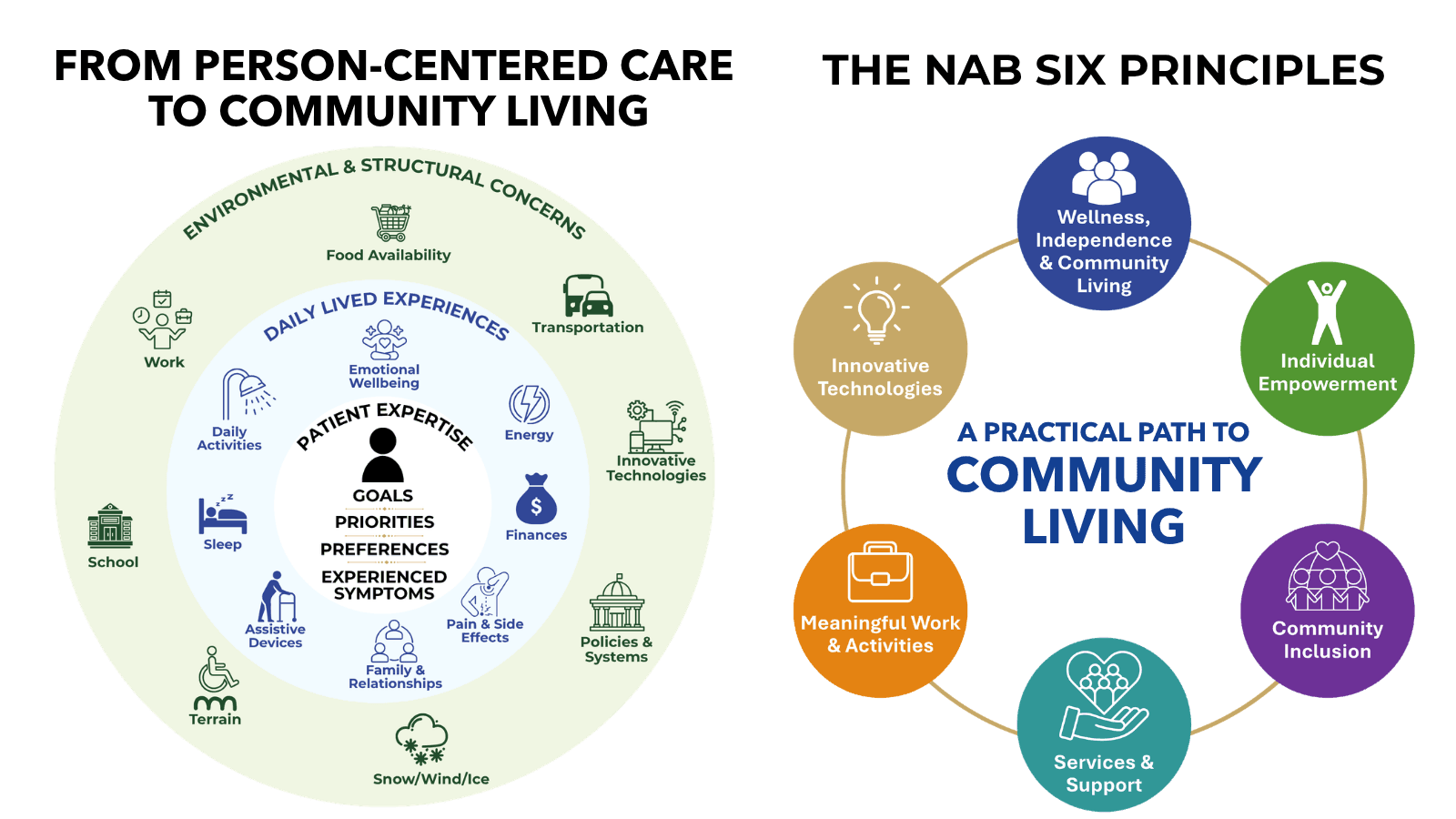
From Patient to Person Living with a Disability: A Person-Centered Care Approach to Transitioning into Disability
PRESENTER: Cynthia Overton
LINKS TO REFERENCES:
- Clear Cane Chronicles: Shaping the Future of Healthcare Through Person-Centered Care
- Initial factor exploration of disability identity
- NAB Six Principles to Modernize the Health Care Infrastructure
- Picker Principles of Person-Centered Care
ACCESS THE POSTER here
The NAB Six Principles: Building a Better Path to Community Living for Older Adults and People with Disabilities
PRESENTERS: Kathy Brill, Merrill Friedman, & Cynthia Overton
ACCESS THE NAB PRINCIPLES: NAB Six Principles to Modernize the Health Care Infrastructure.
Access the Poster here
Picker Principles of Person-Centred Care
The Picker Institute developed the Picker Principles of Person-Centred Care through extensive research and direct engagement with patients, families, and healthcare providers in an effort to understand and share what truly matters to people during their healthcare experiences.
The Picker Principles include:
- Fast access to reliable healthcare advice
Access to the right services at the right time is essential for high quality care that meets individuals’ needs. Access includes: ease of scheduling appointments; minimal waiting for referrals or treatment; and availability of appropriate professionals and advice. Fast, easy access is important both for routine care and unplanned crises. - Effective treatment by trusted professionals
Positive therapeutic relationships are at the heart of person centered care. People should receive clinically appropriate and effective care that meets their needs and is respectful of their preferences. Interactions with care professionals should inspire a sense of confidence and trust. - Continuity of care and smooth transitions
Care journeys bring people into contact with a range of providers and staff. Ensuring these transitions are seamless is vital to person-centered, coordinated care. All people should experience continuity in information, in the relationships they have with staff, and in the way their care is managed. - Involvement and support for family and carers
Providers and staff must acknowledge the importance of people’s families, carers, friends, and wider support networks in their overall health and wellbeing. Their involvement should be welcomed and supported. The emotional impact of caring responsibilities should not be underestimated: carers need to feel supported throughout. - Clear information, communication, and support for self-care
People using health and care services should receive reliable, high-quality, and accessible information at every stage in their journey. Information should be provided at appropriate times, in an understandable way, and should support people to make informed decisions and manage their own care. - Involvement in decisions and respect for preferences
People have the right to be involved in and to make decisions about their health and care. Providers should work with people in equal, reciprocal partnerships, and should respect people's choices and preferences, including but not limited to those that reflect their background, social, and cultural values. - Emotional support, empathy, and respect
Person-centered care demands a caring and holistic approach. People providing care should show empathy and respect, recognising an individual’s emotional needs. For care to be compassionate, it must be delivered with respect, sensitivity, and appreciation of the person as an individual. - Attention to physical and environmental needs
People deserve to be treated and cared for in safe, comfortable environments that afford them privacy and dignity. Similarly, care professionals should be mindful of people’s physical needs, including pain management, assistance with activities, and personal care.

The Six Principles to Modernize the Health Care Infrastructure
The National Advisory Board (NAB) on Improving Health Care Services for Older Adults and People with Disabilities developed the Six Principles to Modernize the Health Care Infrastructure. They were developed through a consensus-driven process informed by both professional expertise and lived experience.
The Six Principles to Modernize the Health Care Infrastructure
- Improve Health and Wellbeing through Individual Empowerment and System Coordination
Empower people to manage their health and wellness with their chosen support network, healthcare and service providers, and communities, regardless of a person’s condition or perceived capabilities. - Achieve Community Inclusion and Full Participation
Expedite access, choice, and full integration into meaningful activities of community living (social, economic, educational, and recreational) by providing and coordinating necessary services and supports. - Ensure Full Access to Services and Supports
Revise and strengthen policies and programs to provide affordable, flexible access to the services and supports people need to live independently. - Value Dignity and Choice
Valuing and ensuring dignity, personal strengths, and self-determination must be core to successful and sustainable long-term services and supports. - Achieve Access to Meaningful Work and Activities
Achieve full community participation in valued roles and equitable access to competitive, integrated employment or other meaningful activities. - Accelerate Access to Innovative Technologies
Ensure that people with disabilities and older adults are key stakeholders and fully involved in the development of new technologies, and have the necessary technologies that support independence, social participation, dignity and self-direction.
